
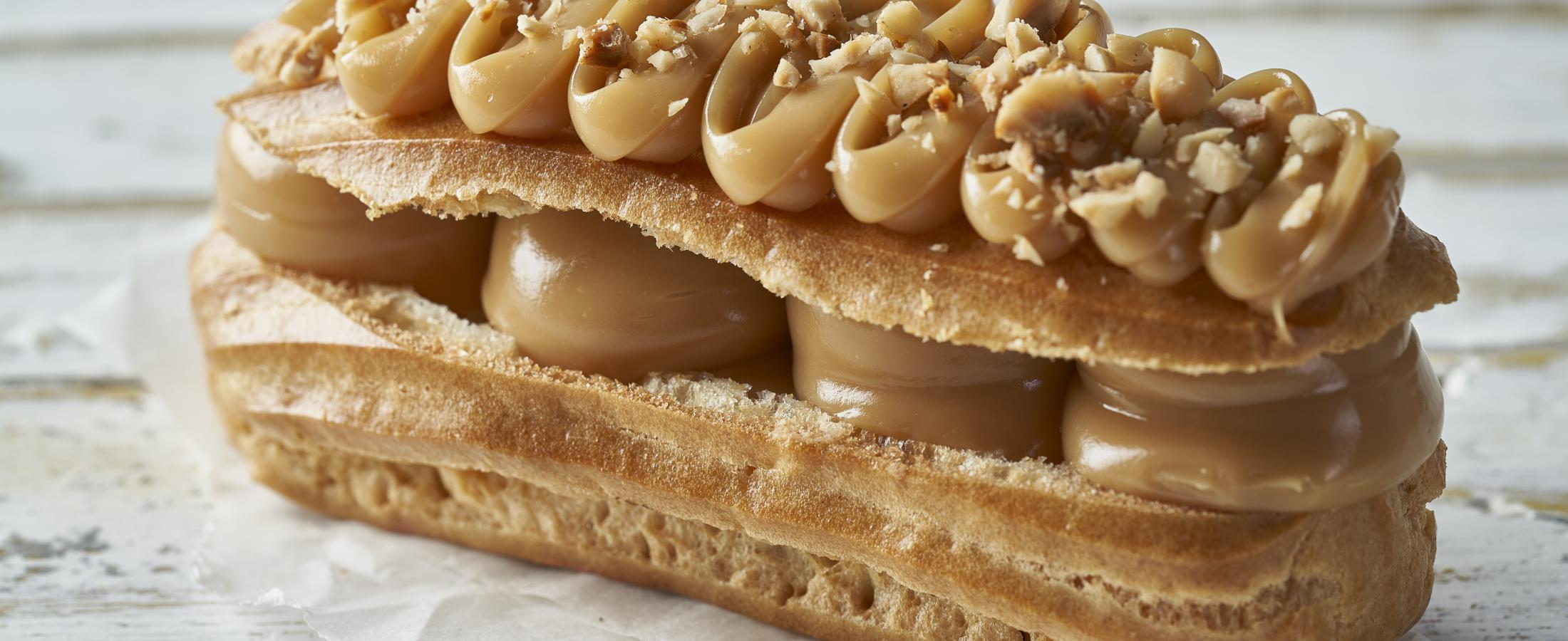
For many people, bakery is closely linked to moments of enjoyment, whether it is a small, everyday treat or something shared and celebratory. Within these moments, there is a growing demand for more complex and engaging experiences. Products that stand out visually and deliver intense, multi-sensory appeal are gaining ground, particularly among younger consumers.
Within bakery, this is shaping a shift towards sensory enjoyment, where products combine multiple flavour and texture elements into one experience, as seen in concepts such as the Banelé. A product that brings together the moist and spongy interior of a banana cake, the caramelised exterior of a canelé, as well as the deep richness of a brownie.

Familiarity with a twist
While visual appeal is gaining importance in bakery products, taste remains the primary driver of choice. Consumers show a strong interest in discovering new and unexpected flavour combinations and they actively seek variation in what they eat. This is reflected in consumer research, where 61% of global consumers say they enjoy food and drink with new and unusual flavours.*
At the same time, familiarity remains essential. Consumers are not necessarily seeking entirely new experiences. Instead, they prefer familiar flavours that are combined or presented in a new way, such as chocolate with sea salt or raspberry with black pepper. The most successful products strike a balance between comfort and surprise, offering variation without losing their sense of familiarity.

Creating value through experience
As expectations around sensory enjoyment increase, so does the opportunity to create added value. Consumers are willing to pay more for products that deliver a distinctive and enjoyable experience, but only when that experience feels justified. Perceived quality is shaped by the total experience, from texture and flavour depth to freshness and consistency. For producers, this means that creating value is not about adding more ingredients, but about making the right sensory choices, combining flavour, texture and appearance in a way that feels distinctive and consistent.

From idea to impact
Delivering a strong sensory experience at scale is not only about execution, but also about deciding which concepts to develop and bring to market. Sensory enjoyment is inherently subjective, making it more difficult to predict what will resonate with consumers. This requires a careful balance between following emerging trends and maintaining consistency in production.
Not every concept needs to be scaled, and not every idea will succeed. The key lies in identifying which sensory elements truly connect with consumers and translating these into products that perform in practice. This involves combining market insights with targeted testing, reducing risk while allowing room to refine and optimise concepts over time.
Indulgence, without compromise
While trends such as health and cleaner label continue to shape the market, sensory enjoyment remains closely linked to indulgence. Rather than replacing it, we see a shift towards more intentional consumption, where smaller portions and more considered choices play a role. In this context, quality becomes even more important. Consumers are not necessarily looking to compromise, but to enjoy products that feel worth it, both in taste and in overall experience.

Continuing to explore
In a landscape where consumer expectations continue to evolve, standing still is not an option. Sensory preferences are dynamic, shaped by culture, context and changing lifestyles. For industrial and mid-sized bakeries, this means continuously exploring new ideas, testing concepts and refining sensory experiences. Not every innovation needs to be radical, but it should always be relevant and meaningful to the consumer.
*Source: FMCG Gurus – Top Trend 1 Prioritizing Pleasure Trend Report (2025); Innova – Global FlavorTrends (2025); FMCG Gurus – FlavorColorTexture Europe Regional Report (2025); GlobalData – Industry insights Top trends in bakery and cereals (2025)